Appropriate to us yoga practice has a beneficial effect on all body systems and physiological functions. It nourishes our external and internal organs and tissues and its results can be felt very quickly in all planes of existence (physical, mental, emotional).
So, our yoga practice evolves along:
- Different levels of relaxation, including deep relaxation.
- Breathing techniques and Kriyas.
- Pranayama or energy control and flow.
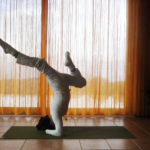
- Body movements and Asanas (physical postures.)
- Mind concentration and meditation.
During a Classical Indian Yoga session:
- We constantly encounter the revelation of our physical entity. We learn how to become principle agents in safeguarding our health.
- Strength goes hand in hand with suppleness. Yoga rejuvenates, tones and at the same time relaxes our body.
- The mind goes calm and stress levels are reduced.
- Vitality increases.
- Energy flow is balanced and has a therapeutic effect on all systems.
- We learn to concentrate and observe ourselves, to harmonize body, breath and mind.
- We acquire physical, psychological and mental balance and peace.
Yoga asanas in many common schools are often practiced within a very austere framework that resembles military discipline or champions’ athletic performances. Our purpose, however, should not be to prove endurance and excellence, once again struggling for perfection in a competitive environment that usually results to hurting ourselves by forcefully exceeding our powers; our purpose should be to delve deeply into a journey of observing, learning, accepting and improving ourselves physically, emotionally, and mentally. To work with our weaknesses and aim for health. Discipline is necessary, but it should be an ally in constant dialogue with our needs, guiding us to a path of liberation from pain and stress, not a forceful rule from the exterior that we need to obey so as to avoid the negative feelings of failure. There is no failure in yoga.